Saucing Chicken Wings
Saucing Chicken Wings
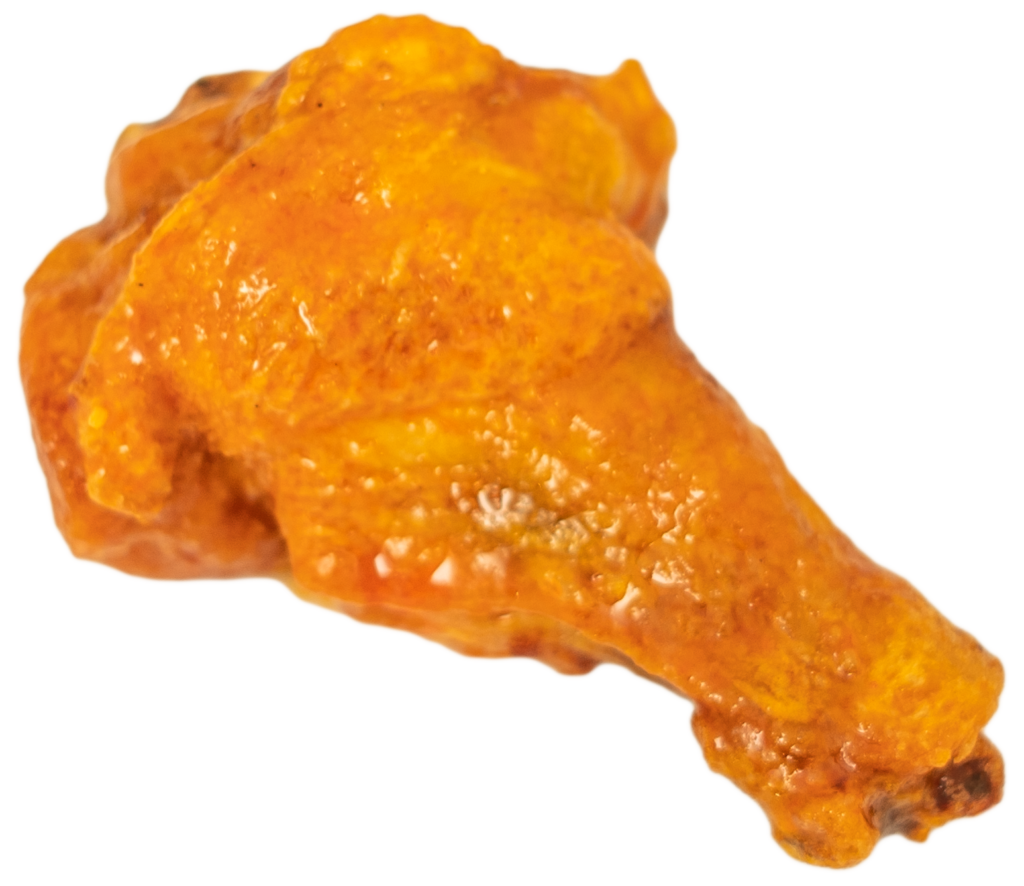
Piping hot chicken wings right out of the fryer covered in spicy cayenne butter sauce is a beautiful thing. Grab a wing, dip it in blue cheese dressing, and take a bite. Heaven.
Saucing wings isn't difficult, but there are a few things that really matter.
The sauce itself isn't complicated. It has two ingredients, Frank's RedHot and butter, and you basically just melt the butter and mix them together. (full recipe here)
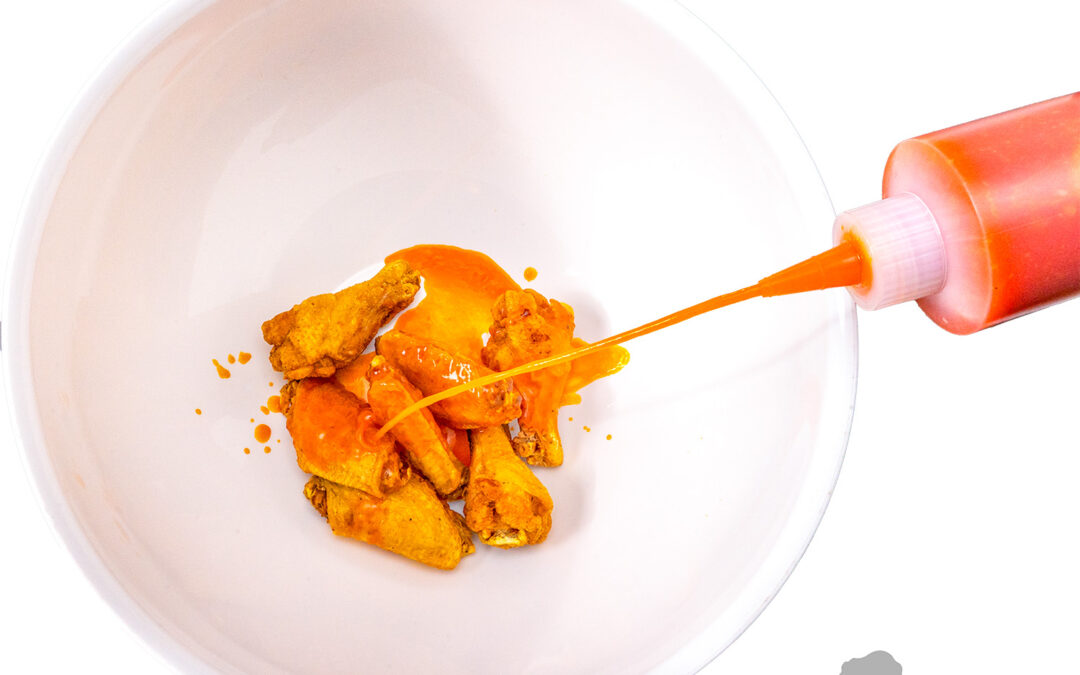
After making the sauce, I recommend putting it in a squeeze bottle so it's ready when the wings come out of the fryer.
How Much Sauce to Use
I like a nice thick coating of sauce on my wings, but more sauce is not necessarily better.
I find that the wings know how much sauce they want. You just need to listen to them. Here's how:
- Be generous with the sauce as you add it to the bowl, slightly more than the wings can hold.
- Transfer the wings to the serving plate one at a time.
- Whatever sticks to the wings on the way to the plate is the perfect amount.
Choosing the Right Bowl
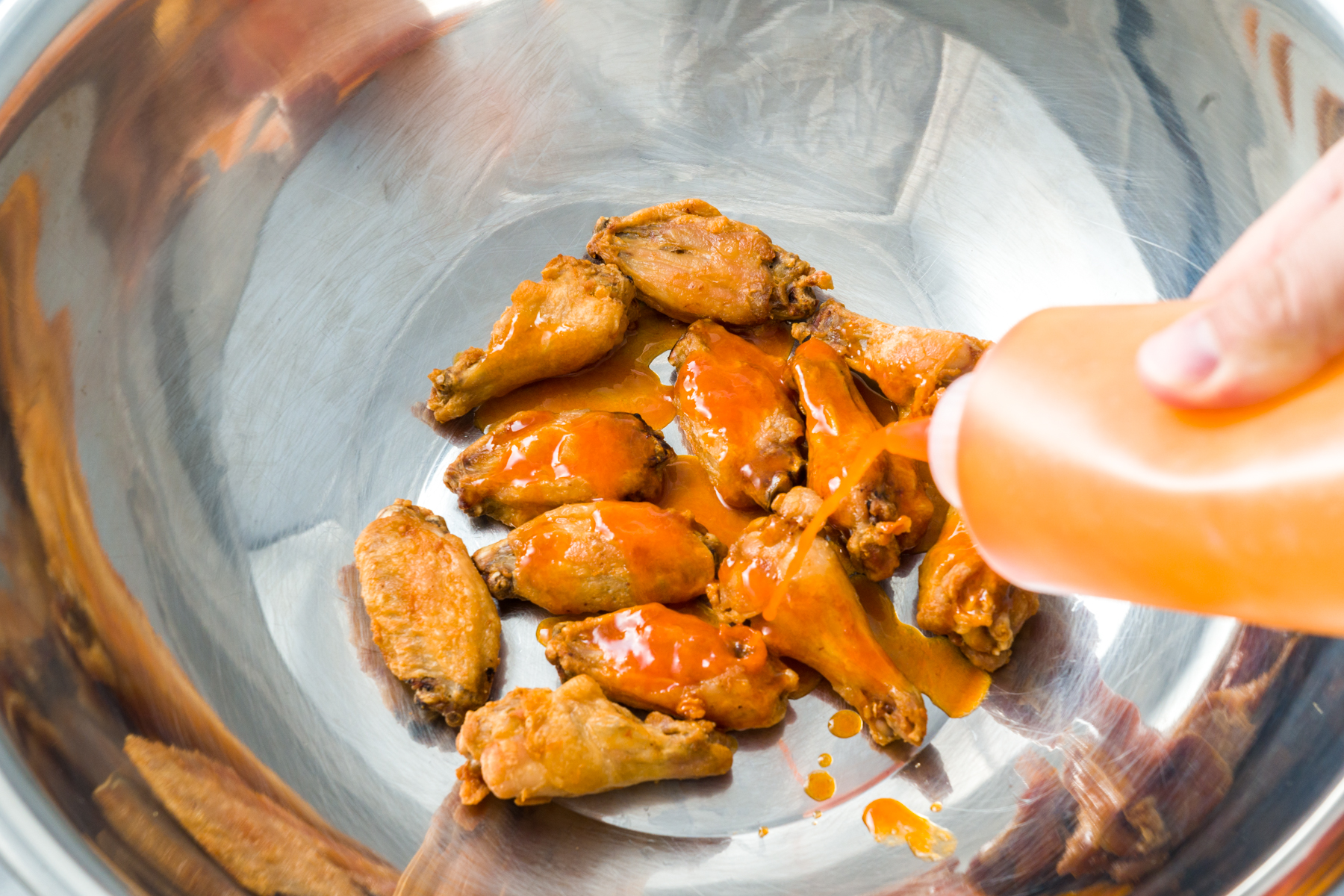
A large wide shallow stainless steel bowl is the perfect tool for saucing wings.
- Metal won’t melt if you accidentally leave it too close to the fryer.
- The large wide shallow shape allows you to quickly maneuver the bowl, build momentum, toss the wings effectively, and keep them landing back in the bowl, though some skill is required.
A small plastic bowl, on the other hand, will likely melt at some point and, though you will eventually get the wings coated, it won’t be fast or clean.
Saucing and Serving
Steps
- Bottle: make Buffalo wing sauce and put it in a squeeze bottle. Pouring straight from the pot is fine too.
- Fry: fry, drain, and immediately drop the wings into a large wide shallow bowl.
- Sauce:
- Squirt or pour sauce onto the wings as evenly as possible.
- Coat them one of two ways:
- Use a spoon or spatula and stir them real good.
- Toss them in the bowl using quick movements to swirl, tumble, and propel the wings airborne before they fall back onto each other.
- Add more sauce and repeat until the wings are evenly coated.
I can’t say that tossing them does a better job than stirring. No one will judge you if that’s how you want to do it, but if anyone is watching, I recommend tossing. It definitely looks cooler.
- Plate: using tongs, quickly and neatly place the wings on a serving dish already prepared with celery and blue cheese dressing. Note: pouring the wings onto the plate, though quick, leaves the wings bathing in a pool of sauce which could speed up the decrisping process. Also, it doesn’t look as good.
- Cover: place a wooden bowl upside down over the wings. This highly specialized equipment keeps the wings hot longer while still letting steam escape, but mainly it is for the bones.
- Serve: get the wings in front of people immediately.
Sauce Temperature
Sauce temperature matters, but Buffalo sauce is pretty forgiving.
A few things to keep in mind:
- Ideal sauce temperature for saucing wings is probably between 140-150°F. This is hot enough not to cool your Buffalo wings but not so hot that it cooks, burns, or potentially breaks your sauce.
- Buffalo sauce will still work at lower temperatures. As long as it is liquid enough to pour or squeeze out of the bottle, the hot wings will further melt the sauce as they are tossed. The sauce will still coat the wings just fine. The only downside to cooler sauce is that it will cool the wings a bit faster.
- If reheating your sauce directly in a saucepan, do it on very low heat, stir constantly, and do not let it boil. Consider a double boiler setup to do this more gently.
- If reheating in a squeeze bottle, I recommend a hot water bath. Hot water from your tap may already be enough. Otherwise, heat water in a pot, remove it from the heat, and submerge the bottle, but not the top. Be careful not to let water get into the bottle.
- Safety note: People leave Buffalo wing sauce sitting warm for hours all the time and it is probably fine, but butter is technically perishable and the USDA would still consider it in the danger zone and unsafe after exactly 2 hours.
Protect the Crisp
A common restaurant experience: My Buffalo wings finally show up and, though they taste good and the meat is right, the skin has no crisp left.
There are many reasons why this might happen, but at a restaurant it is usually because delays happen. Here is one likely scenario: Your once perfectly crisp and hot wings sat on a plate under a heat lamp, slowly poaching in a pool of hot sauce while the rest of the food at the table was prepared and your server was stuck at table 6 listening to someone complain that their wings were not crispy.
I can’t blame the restaurants too much, they do what they can. We don't have that excuse at home. We have the time and power to remove the issues that steal the crisp.
A good start is to drain, sauce, plate, and eat in fast succession.
If wings must wait, unsauced wings hold much better than sauced wings.
But still eat them. Don’t ever throw out Buffalo wings, even the less than perfect ones.