Buffalo Wing Hot Sauce

Buffalo Wing Hot Sauce

Buffalo Wing Hot Sauce

Without the right sauce, they're just fried chicken wings, and calling them Buffalo wings would be a lie. No need to lie, Buffalo wing sauce is super easy to make at home.

It's simply cayenne pepper sauce and butter, two ingredients that have been making great Buffalo wings for decades.

You can make Buffalo wing sauce with any cayenne pepper sauce, but I believe Frank's RedHot is the best choice for traditional Buffalo wings. It's what I grew up using in Buffalo, it's what most restaurants use, and it's still the one I prefer most. In fact, I went most of my life having no idea there were other options available. Once I tried the other options, I quickly realized there were no other options available.

3 parts Frank's to 2 parts butter is the standard medium heat Buffalo wing sauce ratio, and it's the version I recommend. This base recipe produces a medium spice level that is just right for most people and serves as a great starting point for making adjustments. I think this is the perfect balance of butter and Frank's. It tastes great and, though it does have a bit of heat, most people would not find it too spicy. This makes it ideal for groups with different tastes and spice tolerance. We'll discuss how to adjust the spice level later.

Premade Wing Sauce

There are many premade wing sauces available, some good and some less good. If you are short on time, find one you like, warm it up on the stovetop, and you are good to go.

If you have time, nothing is better than the sauce you make yourself. It's quick and easy with only two ingredients: Frank's and butter.

Butter

Franks brings the spice and flavor, but butter makes everything better, and Buffalo wing sauce is no exception. Butter is the x factor people can't quite place, and they are often surprised to learn that Buffalo wing sauce is nearly half butter.

Salted vs Unsalted Butter

Short version: use unsalted butter.

Why? Frank's already contains plenty of salt, and you will have already salted your wings before frying. We don't need any more salt in the sauce.

If all you have is salted butter, use it. Most people will never notice the difference.

Clarified Butter

Clarified butter is butter that has gone through a process to remove the milk solids and water. When done, you are left with almost pure butterfat.

Is clarified butter better? Is it worth the effort? It depends on who you ask. If you ask me, I say it depends.

When melted butter and clarified butter are tasted side by side, there are some subtle flavor differences. However, if you make the sauce using clarified or unclarified butter, most people won't be able to tell the difference when eating their wings.

Melted butter has been commonly used in Buffalo since the recipe was created, and most restaurants still use it today.

The main advantage of using clarified butter is that the Buffalo wing sauce is more stable. When cooking wings over an extended period of time and the sauce temperature is raised and lowered several times, the sauce is less likely to break (separate) when made with clarified butter.

Ghee is another name for clarified butter. It is shelf stable and available in most grocery stores. This is a great way to use clarified butter without the time and effort involved in making it yourself.

Don't overthink it. If you're not sure, just use plain butter. You won't regret it. But whether you use regular butter or clarified butter, both will produce excellent results.

Mixing and Heating

The process of making the sauce is minimal. Simply warm the butter until just melted, remove it from the heat, add the Frank's, and whisk until the sauce is uniform in color and texture.

Don't Overheat the Sauce

Prevention is easier than repair. Frank's and butter is actually very forgiving and can handle some heat, but excessive or prolonged heat is unnecessary and may eventually damage the sauce.

Overheating will eventually lead to one of two problems: burning, which leaves a bad taste, or breaking, which causes the sauce to separate.

Uh Oh, I Overheated the Sauce

Burned taste: There is nothing that can reverse a burned sauce. Toss it and make a new batch.

Separated sauce: If your sauce is separated, try letting it cool a bit, then whisk it vigorously. If that doesn't work, add a little Frank's or water and try again. If that still doesn't work, you can try other emulsifiers such as mustard, but they will affect the taste.

Reheating the Sauce

Do it gently. Use low heat, stirring frequently, and stop as soon as the sauce is hot and uniform.

Choosing Spice Levels

Everyone has their own spice tolerance and preference. Sometimes it's cultural. If you grow up eating spicy food, chances are you'll enjoy foods with a little more heat. Other times it becomes a social thing, almost a competition, where people take pride in being able to handle more heat than everyone else.

Mostly I try to create wings that will work for everyone. Some people love heat and think that the hotter the better. I used to be in that category, but as my wing palate has matured, I have become more focused on flavor and making wings that most people will enjoy, not just a few.

I believe the medium sauce recipe, as found below, achieves the perfect balance and is the version I recommend. It is a delicious example of classic Buffalo wing flavor and hits the sweet spot with just enough spice that most people can comfortably enjoy it. For those who want to adjust the spice level, let's talk about how to get there.

Adjusting the Spice

Adjusting the spice level is as simple as adjusting the butter to hot sauce ratio.

  • Mild: 1/2 cup Frank's, 3/4 cup butter
  • Medium: 3/4 cup Frank's, 1/2 cup butter
  • Hot: 3/4 cup Frank's, 1/4 cup butter

When making wings for young children, I will often use only butter or butter with a splash of Frank's. Though technically not Buffalo wings, the kids don't know that or care because perfectly fried chicken wings covered in butter are delicious.

Adding Even More Spice

Classic wisdom says to make Buffalo wings spicier, add more Frank's. This works, but there is a downside. More Frank's means less butter, and butter is delicious.

If you want even more heat without giving up the butter, there are other options. Frank's XTRA Hot, powdered cayenne pepper, and capsaicin extract can all increase the heat level while maintaining a buttery sauce.

These methods can dramatically increase the heat level and deserve a deeper discussion than this article allows. We'll cover them in a future article.

Suicide Wings

When trying to create a Buffalo sauce that is extremely hot, you quickly discover that cayenne pepper has its limits. For this reason, many suicide wing sauces no longer taste like traditional Buffalo wing sauce. In fact, depending on how they are made, they may not even technically qualify as Buffalo wings according to the definition used throughout the BuffWing website because they no longer contain cayenne pepper sauce or, in some cases, even butter.

Cooking for a Crowd

When cooking for a group, medium is the magic sauce that works for almost everyone, but don't feel like you need to choose a single spice level and force everyone to eat it. Buffalo wing sauce is quick and easy to make, so I often prepare multiple bottles with different spice levels. This allows everyone to get their wings exactly how they like them.

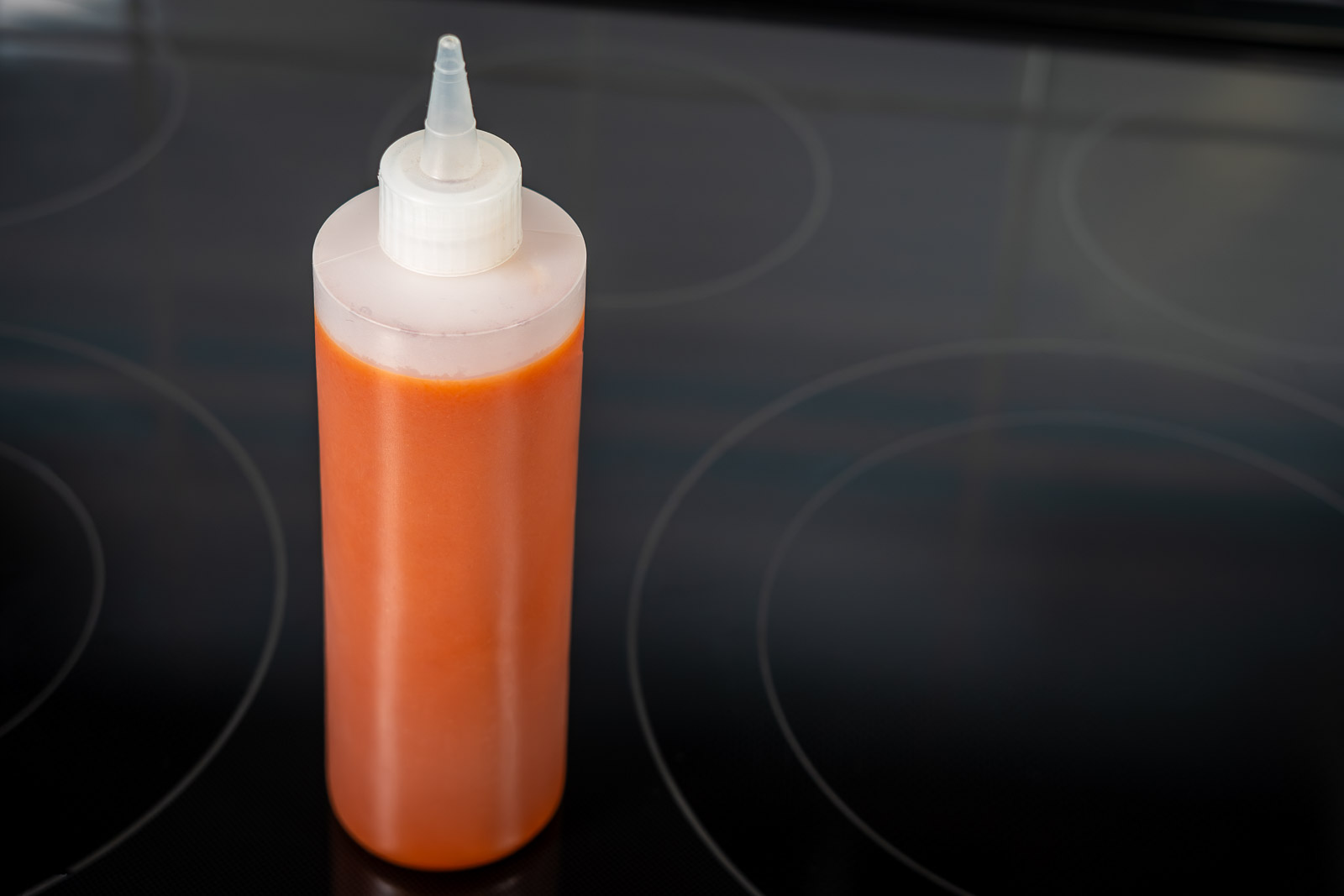
Squeeze bottles work especially well for this. Label each bottle and keep them warm so everyone can choose their own heat level.

Saucing

Learn More: Saucing Chicken wings

Have the sauce ready before the wings are cooked. The last thing you want is to be making sauce at the last minute while the wings are getting cold.

Tip: Use Squeeze Bottles

Squeeze bottles are inexpensive and the perfect tool for sauce management. They allow you to have your sauce prepped and ready to quickly and accurately apply it to hot, fresh wings exactly when you need it.

Closing Thoughts

Buffalo wing sauce is simple to make, but the details matter. If cooking for a crowd, remember that the goal is to make something everyone will enjoy, so know your audience.

You can't go wrong with the recommended medium recipe for a group with varying tastes. Better yet, prepare multiple bottles with different spice levels so everyone can get their wings exactly how they like them.

Don't overheat the sauce, have it ready when the wings are done, and use a squeeze bottle for easy application. Follow those simple guidelines and you can expect a smooth saucing experience.

Buffalo Wing Hot Sauce

Recipe by BuffWing.com
0.0 from 0 votes

This recipe makes a medium heat Buffalo wing sauce. See the notes below for ways to adjust the spice level.

Course: SauceCuisine: AmericanDifficulty: Easy
Servings
+
-

8

servings
Prep time

3

minutes
Cooking time

5

minutes

Ingredients

  • 3/4 cup cayenne pepper sauce (Frank's RedHot)

  • 1/2 cup unsalted butter

Directions

  • In a medium saucepan, heat the butter until just melted. Remove from heat.
  • Add the cayenne pepper sauce and whisk until the sauce is uniform in color and texture.
  • Use right away to sauce wings or transfer to a squeeze bottle for easier application and portion control. It's also a great way to store unused sauce in the fridge.

Recipe Video

Notes

  • To adjust the heat, the classic method is to increase the cayenne pepper sauce for more spice or decrease it for less spice.
    Mild: Use 1/2 cup cayenne pepper sauce and 3/4 cup butter.
    Hot: Use 3/4 cup cayenne pepper sauce and 1/4 cup butter.
  • For even more heat, try replacing original Frank's with Frank's XTRA Hot, adding some powdered cayenne pepper, or, if you're feeling very bold, pepper extract. Use caution with that last one.
  • Do not overheat the sauce. Excessive heat can cause the sauce to separate or develop a burned taste.
Blue Cheese Dressing for Buffalo Wings

Blue Cheese Dressing for Buffalo Wings

Blue Cheese Dressing

I Love Blue Cheese Dressing

This is my go to homemade blue cheese dressing for Buffalo wings, parties, and anything else that deserves a better dip.

I could have called this website Blue Cheese Dressing (and Buffalo Wings Too) and it would have been accurate.

In Buffalo, it's rare to hear someone call it blue cheese dressing. We always call it blue cheese. If someone asks if you want blue cheese with your wings, they're talking about the dressing, not the cheese itself. From this point on, I'll mostly call it blue cheese too.

I really do love blue cheese.

It’s amazing and mandatory with wings. It’s also great on pizza, french fries, salads, and almost anything else.

My wife has even caught me eating it straight from the jar with a spoon (or my finger) more than once. Yes, it’s embarrassing, but I can’t help myself.

In fact, it’s enough of a problem that I’ve actually created a rule: I only make what will be eaten with that meal, or I send the leftovers home with guests.

How it Started

Blue cheese was always around when I was growing up, but honestly, I didn’t appreciate it nearly enough as a kid. I liked it with wings, but that was about it. At home, there was usually a bottle of store-bought in the fridge for salads, but it never tasted as good as the little round tubs that came with delivery wings.

But the stuff at Grandma’s house was always the best. Once I learned how she made it, there was no going back.

I’m not sure how old I was when Grandma Fran taught me how to make it. Thirteen would be my best guess. There were no written measurements and no recipe card.

It was blue cheese, equal parts sour cream and mayo, some garlic powder, enough white vinegar to make it look right, plus a bit of sugar to balance it. Then she would taste it and adjust from there.

Honestly, I never bothered measuring anything until I finally started writing down recipes properly for use on this website and in my upcoming book, The Perfect Buffalo Wing.

Building the Recipe

When I started creating structured recipes, I wanted to turn my homemade blue cheese dressing from something I made by feel into something people could actually follow.

So I gathered all the supplies: ingredients, measuring cups and spoons, bowls, spatulas, a legal pad, and a pen. Then I made a batch the way I normally would, but this time I measured each ingredient before adding it and wrote it all down.

The first challenge was immediately obvious. Unlike cream cheese or butter, blue cheese is sold in all kinds of package sizes with no standard. That doesn’t matter when I’m making it by feel. I can look at the cheese and think, “That’s not much blue cheese, so I’ll use less of everything else.” But that instinct doesn’t translate into a written recipe, so “one package” means nothing.

For my first batch, I bought a wedge-shaped plastic container of blue cheese I already knew was good quality. It was a 5.5-ounce package, and once I measured everything out, I realized the recipe needed to be based on the right proportion and what tasted right, not whatever size package happened to be on the shelf.

My first measured version was good, but not quite right. It had too much vinegar, and the blue cheese flavor wasn’t strong enough. I added more blue cheese and it improved right away. A bit of sugar balanced the acidity.

After that, over the course of a few months, I made more batches, adjusting the ingredients each time and luring test subjects to my house with promises of Buffalo wings.

The final result is heavy on blue cheese, light on vinegar and garlic, with just a little sugar.

Lessons Learned

Great Blue Cheese Makes Great Blue Cheese

Use high-quality blue cheese whenever possible. The best you can find (or afford) is usually the right choice. Blue cheese comes in all shapes, sizes, and qualities, so one variety may work perfectly for this recipe while another may be so strong or so mild that you need to adjust the amount.

Soft, flavorful blue cheese tends to work best, while some dry and crumbly varieties can be weak and leave you with a disappointing result. Some blue cheeses are simply unsuitable and, no matter how much you add, the dressing will still fall short of what is required to honor your perfect Buffalo wings.

Beware: there are some very bad blue cheeses out there, more like moldy cardboard than cheese, and there is no fixing blue cheese once it has been contaminated by bad blue cheese.

Chunk Size Matters

If the chunks are too small, the dressing becomes smooth and boring. If they’re too large, they won’t scoop well onto the wings.

Aim for small to medium chunks. I find crushing the blue cheese with a fork until the largest pieces are somewhere between the size of a pea and a pistachio works well.

Garlic: Fresh or Powdered?

I believe fresh garlic gives the best flavor, but garlic powder works just fine. If substituting, use about 1 teaspoon of garlic powder for each fresh clove.

This recipe keeps the garlic balanced for most people, but if you’re a garlic lover, don’t be afraid to push it further.

It Gets Better With Time

Blue cheese is good right away, better after a couple of hours, and best after a night in the fridge.

Mayo Matters

Use a good mayonnaise. Cheap mayo can sometimes contain a flavor that drags the whole recipe down. I usually use a popular national brand found almost everywhere, and it works great.

I’ve made my own a couple of times, and it made the blue cheese even better. However, it takes extra work, and over time, homemade mayo doesn’t stay emulsified as well as store bought so you may notice some separation after a couple of days.

I’ve never actually experienced that myself, since blue cheese never lasts that long in my house.

Bold Variations

Personally, I love a strong blue cheese dressing, and I rarely make it exactly the same way twice. I generally use more garlic, skip the sugar or swap it for maple syrup or honey, replace white vinegar with balsamic or red wine vinegar, add bacon crumbles, or mix different blue cheeses.

If it’s just you, have fun with it and get a little crazy. Just no Ranch dressing. Being from Buffalo, that’s not okay.

Why This Version Won

After months of experimenting and luring people over with promises of Buffalo wings, this is the version that won. It’s thick and easy to pile onto a wing with one scoop. It uses plenty of blue cheese, which is what it should taste like, without so much garlic or vinegar that it puts people off.

Overall, people have loved this version.

Blue Cheese Dressing for Buffalo Wings

Blue Cheese Dressing for Buffalo Wings

Recipe by BuffWing.com
0.0 from 0 votes
Course: Condiment, DipCuisine: American, BuffaloDifficulty: Easy
Servings
+
-

8

servings
Prep time

10

minutes

Homemade blue cheese dressing for Buffalo wings that’s thick, creamy, and loaded with flavor.

Ingredients

  • 6 oz blue cheese

  • 3/4 cup mayonnaise

  • 3/4 cup sour cream

  • 2 tbsp white vinegar

  • 2 cloves fresh garlic (finely minced)

  • 1/2 tsp sugar (optional)

Directions

  • In a large bowl, crush the blue cheese with a fork into small to medium chunks.
  • Add the remaining ingredients and mix until combined, leaving some blue cheese chunks intact.
  • Enjoy immediately, but for best flavor refrigerate at least 2 hours, preferably overnight. Store covered in the refrigerator.

Recipe Video

Notes

  • Use good blue cheese: Quality matters. Soft, flavorful blue cheese works best.
    Thick and scoopable: This recipe produces a thick blue cheese that can be piled high on a Buffalo wing with a single scoop.
    Chunks matter: Too small, and the dressing becomes smooth and boring. Too big, and they won't scoop well.
    Garlic options: Fresh garlic is best, but 1 teaspoon garlic powder per clove works well.
    Better with time: Blue cheese is good right away, better after a few hours, best overnight.

How to Fix Your Blue Cheese Dressing

Allow the blue cheese to sit in the fridge for at least a couple of hours before judging it. Garlic and blue cheese need time to meld with the other ingredients.

  • If the flavor is too weak, add more blue cheese, garlic, or both.
  • If the flavor is too strong, add equal parts sour cream and mayo.
  • If it is too thick, add milk, half and half, or heavy cream, a little at a time, until it reaches the right consistency.
  • If it is too acidic, add a little sugar.
Celery Sticks for Buffalo Wings

Celery Sticks for Buffalo Wings

Why Celery?

Celery has always been part of the Buffalo wing experience, and for good reason. When at its best, it’s fresh, cool, crisp, refreshing, and exactly what you want to be eating between fried, spicy, buttery, hot Buffalo wings. Buffalo wings and celery are about as different as two foods can be, and I believe that is exactly why they work so well together. Opposites attract.

Celery also goes great with the other member of the support team: blue cheese. Eating celery and blue cheese dressing is a great way to pass time while the wings are cooking.

Sadly, celery often gets the short end of the stick (pun intended) and is treated as little more than decoration. Part of the problem is that many restaurants do not give celery the respect it deserves. When you are served a plate of glorious wings and there are just a couple of small, limp celery sticks off to the side, warm and covered in wing sauce, they are not very appealing to eat.

Many people clean every scrap of meat from the bones but leave the celery behind. I eat mine.

Choosing Celery

When shopping for celery, choose carefully. Fresh celery almost always tastes better and has more crunch.

I look for a vibrant green color and clean, firm stalks. If they have leaves, the leaves should be healthy and not wilted, dry, or slimy. As celery ages, it becomes limp and rubbery, its color starts to fade, and it loses much of the crunch that makes celery enjoyable to eat. It also develops imperfections on the stalks, including small dry spots and other blemishes. After cutting, fresh celery will be something people actually want to eat instead of leaving on the plate.

Prepping Celery

Rinse: Cut the bottom off the bunch where the stalks meet, then rinse the stalks under cold running water.

Cut: Celery will stay freshest when left whole in the fridge, so don't cut it until it's needed. Cutting it in advance is fine, but ideally no more than a day or two.

Trim the stalks and remove any damaged sections. Cut off the wide flared end and the thin leafy ends so you are left with the uniform straight center.

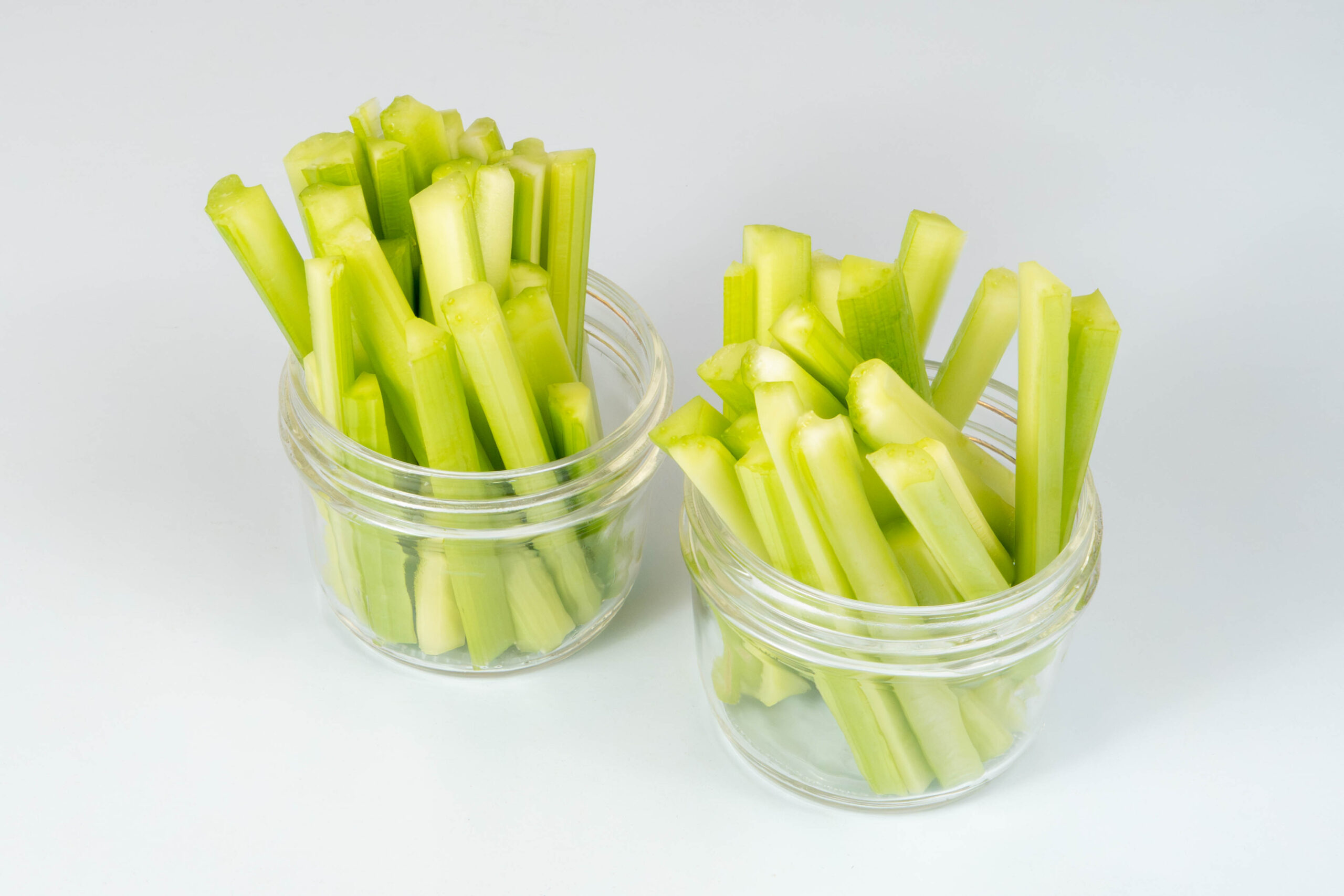
The remaining center section can usually be divided into 2 or 3 equal pieces. Some stalks are thick enough that you may want to divide them lengthwise too. Try to keep them uniform in size. About 3 to 5 inches is standard.

Sometimes the outer stalks have especially fibrous strings that some people find unpleasant. You may de-fibre the celery if you like, but it’s not done often in restaurants and I don’t think it’s necessary. Fiber is good for you, and taking it out is a pain. The only downside is you might be chewing it for a while.

There are different techniques for removing the fibers that are just a quick search away, but they are beyond the scope of this article.

Store: Store cut celery in cold water in the fridge. It will stay crisp for several days. When ready to use, drain and dry before serving.

Serving Celery With Buffalo Wings

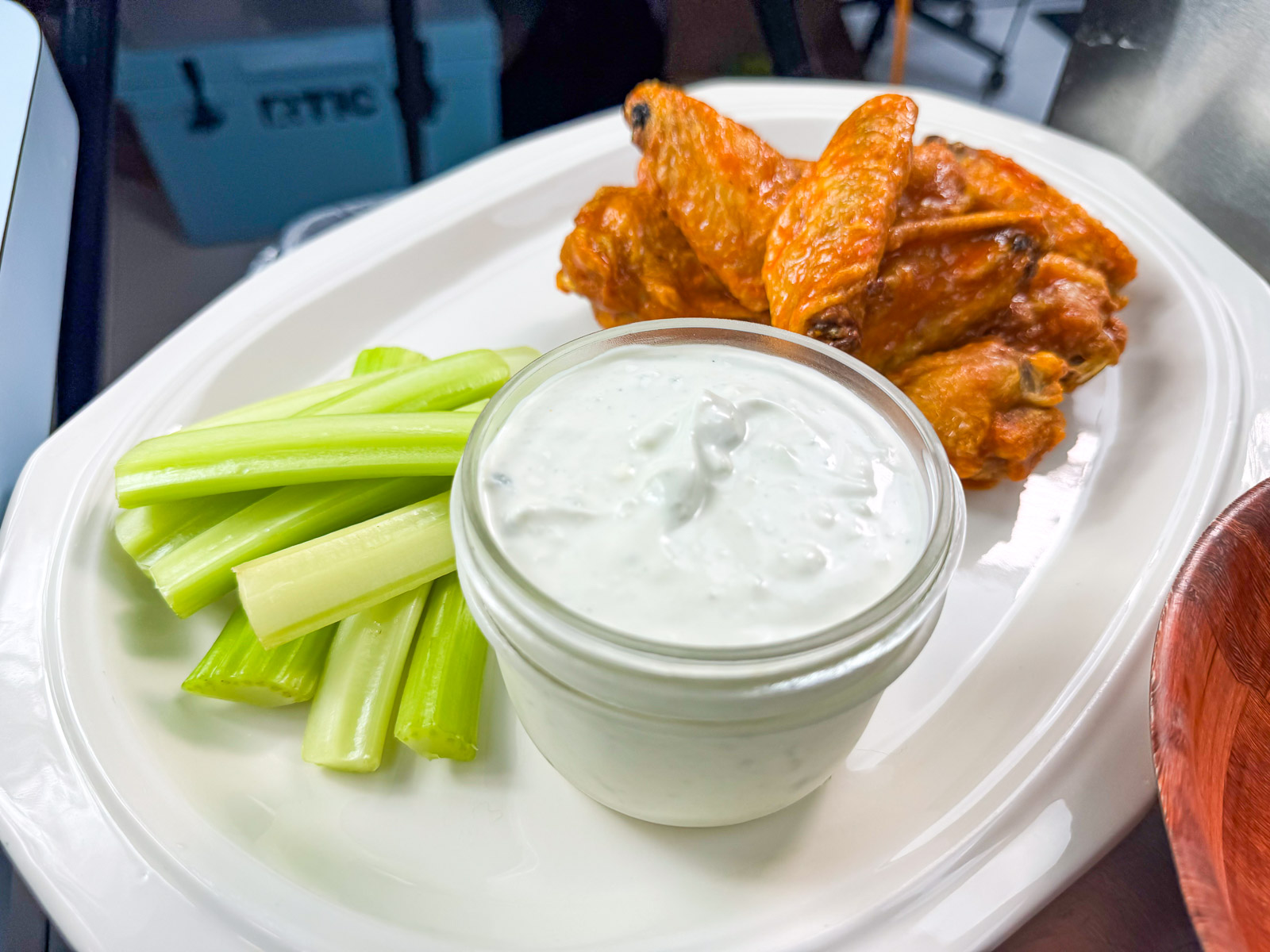
In a restaurant, celery is served on the plate alongside blue cheese dressing. When entertaining, I prefer to put the celery in its own serving dish on the table next to a container of blue cheese dressing. This way guests can snack on it as needed. I think it is best served cold straight from the fridge, so put it out as needed.

Celery sticks

Celery Sticks

Recipe by BuffWing.com
0.0 from 0 votes

Fresh, cold, crisp celery sticks provide the perfect contrast to spicy Buffalo wings and rich blue cheese dressing.

Course: Side DishCuisine: AmericanDifficulty: Very Easy
Servings
+
-

6

servings
Prep time

5

minutes
Cooking time

0

minutes

Ingredients

  • 1 Bunch Celery

Directions

  • Separate stalks: Cut the bottom off the bunch where the stalks meet.
  • Rinse: Rinse the stalks under cold running water.
  • Trim: Trim the stalks and remove any damaged sections. Cut off the wide flared end and the thin leafy ends so you are left with the uniform straight center.
  • Cut to length: Cut the remaining center section into pieces about 3 to 5 inches long.
  • Slice lengthwise if needed: If the stalks are thick, slice them lengthwise.
  • Store: Store cut celery in cold water in the fridge until ready to serve.
  • Serve: Drain and dry before serving.

Reviving Limp Celery

We've all been there. People will be arriving for the wing party soon, and you realize the celery is limp. Don't be embarrassed. This can happen to anyone, and it’s really not a big deal.

How to fix it:

It's really a matter of hydration. Cut off the dry ends and place the celery in cold water, then put it in the fridge for at least half an hour. Longer is usually better.

Final Thoughts

Fresh, cold, crisp, refreshing celery is the perfect contrast to Buffalo wings and helps bring balance to the plate. It is an important part of the Buffalo wing experience and should always be close by.